Friday, 6 February, following the consortium and review meetings, FIREFLY partners and external experts participated in a full-day workshop that proposed various exploitation pathways for the technical outcome to be carried further, beyond the project’s completion. The meeting combined two strands of work: a review and update of the project’s key results and a future-looking planning session to map out the actions needed after 2026.
The morning session opened with an overview of the progress achieved by the technologies explored in FIREFLY. Various technologies have already achieved notable performance levels, including high-purity metal recovery routes. During testing, catalysts synthesised from the recycled metals showed comparable or even better catalytic activity than fresh materials.
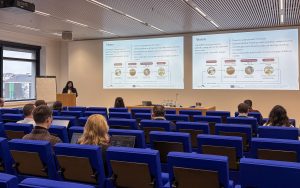
Each technology group explained its most promising achievements, with a focus on potential application sectors and an outline of the remaining steps before moving to larger-scale trials. Recovery routes based on electrochemical methods, catalyst re‑manufacturing and the related toolbox developments sparked most of the discussion. External participants raised questions about the steps required to raise technology maturity, the importance of cost checks at a larger scale and the need to work closely with operators who manage relevant waste streams.
Energy use was one of the recurring subjects. With prices increasing, any process highly dependant on electricity faces an uphill task. The other comments addressed the cost competitiveness topic, underlining that any recycled product must stay within a range that remains financially attractive to the industry.
The afternoon sessions switched to forward planning. Using a roadmapping canvas, participants from both research and industry, split in two working groups, identified an action plan for the FIREFLY technology in 2026 and beyond, stretching to 2035-2040. Some saw value in using modelling tools to estimate how a waste stream is likely to behave, helping operators decide which route is most suitable before committing resources. Others suggested widening the scope to more critical materials, starting with those that are easier to recover before taking on more complex ones.
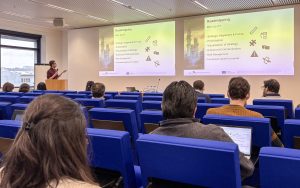
When discussing enablers and challenges, participants pointed out that even simple extraction steps can carry high costs, especially for certain end‑of‑life products, before any advanced process is added. This pointed out at rules and incentives: when the framework favours established industries, it often slows down alternatives that could offer lower emissions or different recovery routes. Other interesting insights called attention to the need to stimulate the demand for circular catalysts and to ensure dedicated funding for the continuation of successful R&I projects towards commercial applications.
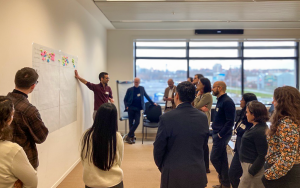

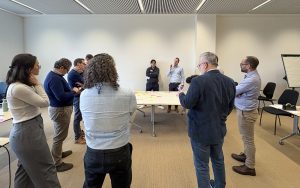
Common points included the need for further trials with real industrial feedstocks, coordinated work on energy management, and continued testing of recycled catalysts in different processing environments.
The session closed with a short set of follow‑up items, including contacts with organisations interested in further trials and the preparation of samples for external testing.